Looking for our Quantum Radar activities? We have a dedicated website: here
Radar and Navigation Group
The Radar and Navigation Group has been active for over twenty years, working in the fields of radar systems, signal processing, air traffic control, and satellite navigation.
Its research combines theoretical development, algorithm design, and experimental validation, often in collaboration with international partners.
Research Areas
Satellite Navigation
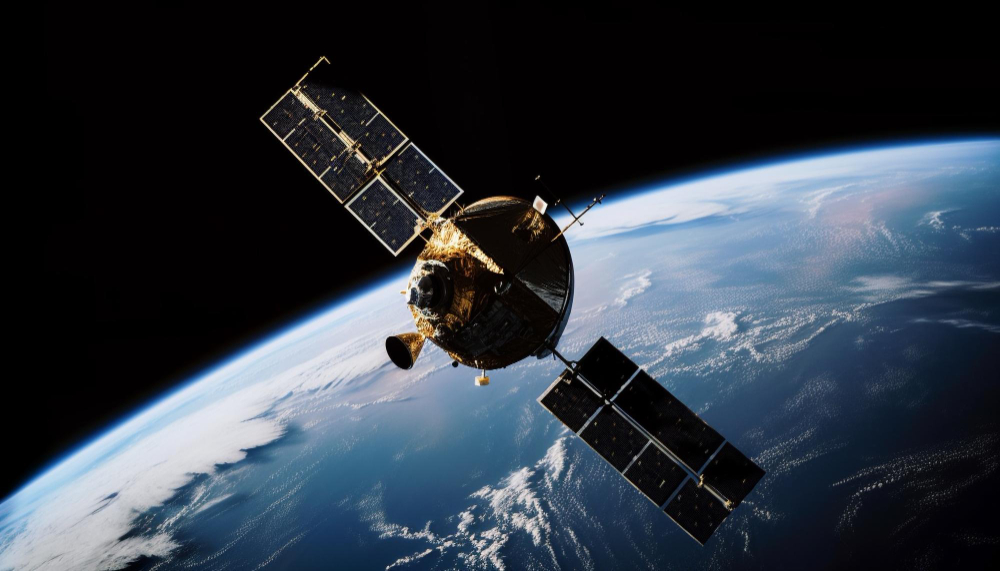
Global Navigation Satellite Systems (GNSS) provide worldwide positioning, navigation, and timing services using constellations of satellites orbiting the Earth. By measuring signal travel time from multiple satellites, GNSS receivers can determine precise location and time in real time. These systems underpin a wide range of applications, from transportation and mapping to telecommunications and scientific research.
Research on GNSS (GPS, Galileo) with focus on safety-critical applications:
- Localization techniques
- Integrity monitoring and augmentation techniques
- Statistical analysis of navigation data
- Applications to airport traffic and landing procedures
- System architectures and performance evaluation
Extraterrestrial Satellite Navigation
Extraterrestrial satellite navigation focuses on extending positioning and timing capabilities beyond Earth, in particular to support lunar exploration and operations:
- New Satellite Navigation system for Moon navigation
- Autonomous Orbit Determination and Timing
- Moon base agmentation system

Radar Systems & Air Traffic Control
Radar systems are fundamental to modern air traffic control, enabling reliable surveillance of aircraft in both en-route and airport environments through technologies such as primary radar, SSR Mode S, and ADS-B. Research on radar technologies for air traffic surveillance and control, including:
- Primary and secondary surveillance radar (SSR Mode S)
- Signal processing of transponder replies and squitter signals
- Integration of meteorological channels within ATC radar systems
- Analysis based on real recorded data in collaboration with international institutions
- Airport Surface Systems (A-SMGCS)
- Surface Movement Radar (SMR) detection and performance analysis
- Plot extraction and target tracking (TWS)
- Conflict detection and traffic monitoring
- High-resolution radar imaging of airport surfaces
- ADS-B and Multilateration
UWB localization
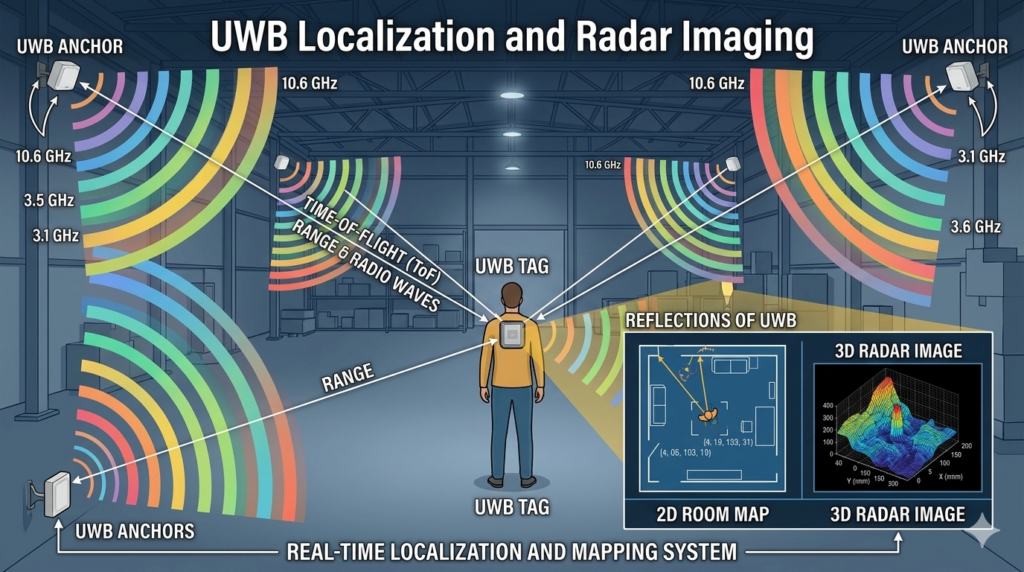
Ultra-wideband (UWB) localization is a positioning technique that uses short radio pulses over a wide frequency spectrum to achieve very high accuracy. Unlike traditional wireless systems, UWB can precisely measure the time it takes for signals to travel between devices, enabling centimeter-level positioning in many environments. This makes it especially useful for applications such as indoor navigation, asset tracking, and robotics, where GPS is often unreliable or unavailable.
Multifunction Phased Array Radar (MPAR)
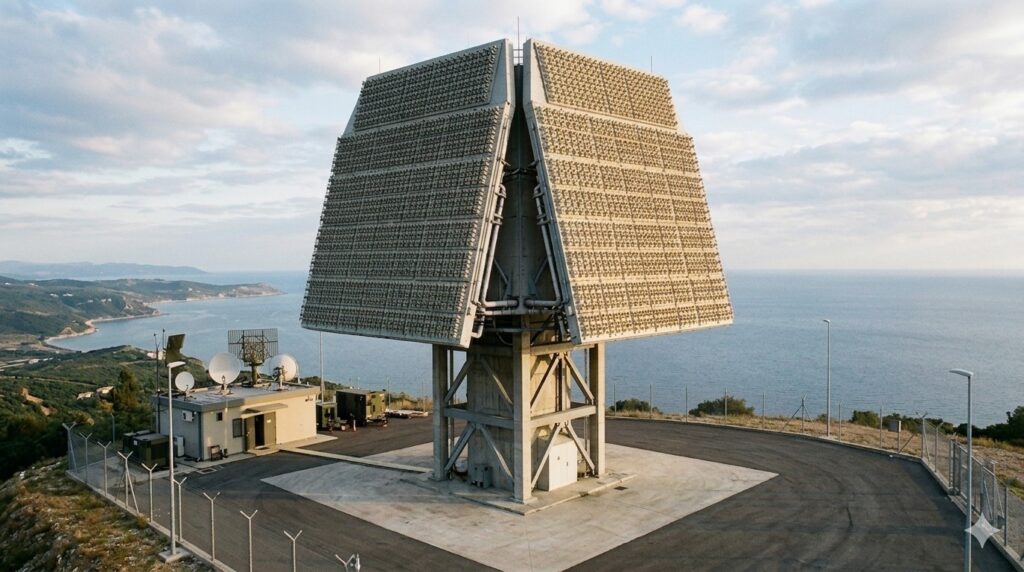
Multifunction Phased Array Radar (MPAR) systems use electronically steered antenna arrays to perform multiple radar tasks—such as surveillance, tracking, and weather monitoring—within a single platform. By rapidly directing beams without mechanical movement, they offer high agility, faster updates, and improved reliability compared to traditional radars. These capabilities make MPAR a key technology for integrated airspace management, defense, and environmental observation. Development of next-generation radar systems capable of multiple simultaneous functions, such as surveillance and weather observation:
- Electronically steered phased array antennas
- Integration of multiple radar roles into a single system
- Increased operational efficiency compared to traditional radar networks
Signal Processing Techniques
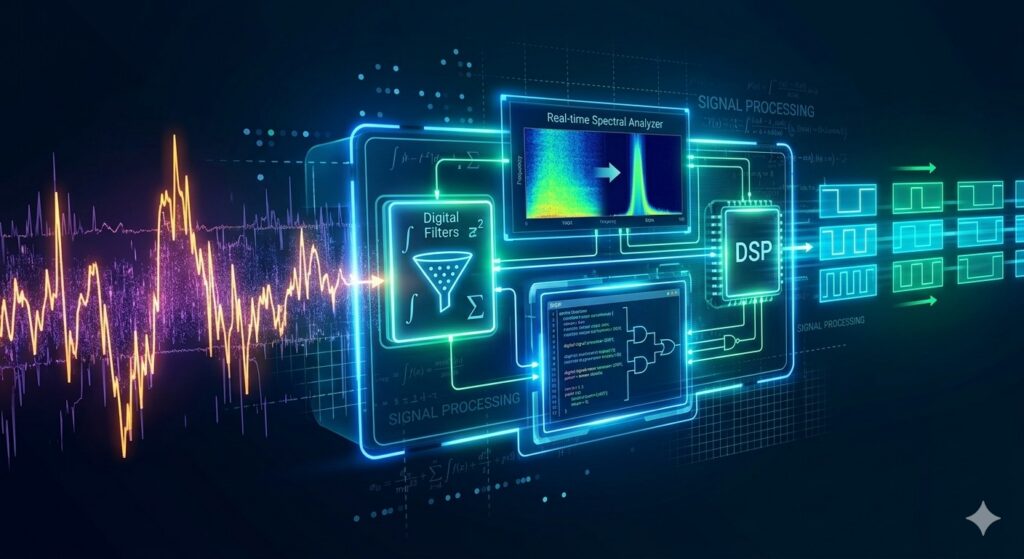
Research focused on advanced signal processing methods for sensing and localization:
- Joint estimation of time and frequency of arrival
- Direction-of-arrival estimation for extended radar targets
- Radio source localization
- Processing of complex radar signals
Noise Radar
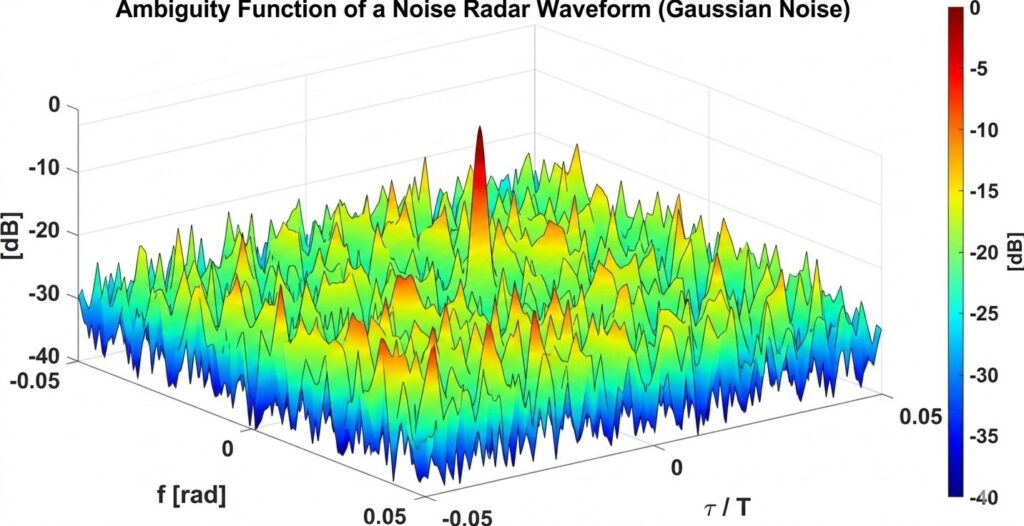
Noise radar is a type of radar system that uses random or pseudo-random waveforms instead of traditional deterministic signals for target detection and ranging. By correlating the transmitted and received noise-like signals, it can achieve strong resistance to interference, low probability of interception, and improved performance in complex environments. These characteristics make noise radar attractive for applications requiring stealth, anti-jamming capability, and robust operation in cluttered scenarios.
Study of radar systems based on noise-like waveforms:
- Continuous or pulsed noise transmission
- Target detection through correlation between transmitted and received signals
- Applications in low-probability-of-intercept radar systems
Collaborations
The group has established collaborations with leading companies, universities, and organizations in the field, both at national and international levels. These partnerships have enabled joint participation in funded research projects and competitive calls in Italy as well as across Europe. This collaborative network strengthens the scientific impact and visibility of the group’s activities.
Education
The group is actively involved in teaching university courses covering a wide range of topics, including random processes, signal processing, radar systems, satellite navigation, and cybersecurity. These activities reflect a strong commitment to advanced education and the development of interdisciplinary expertise in modern engineering domains.